
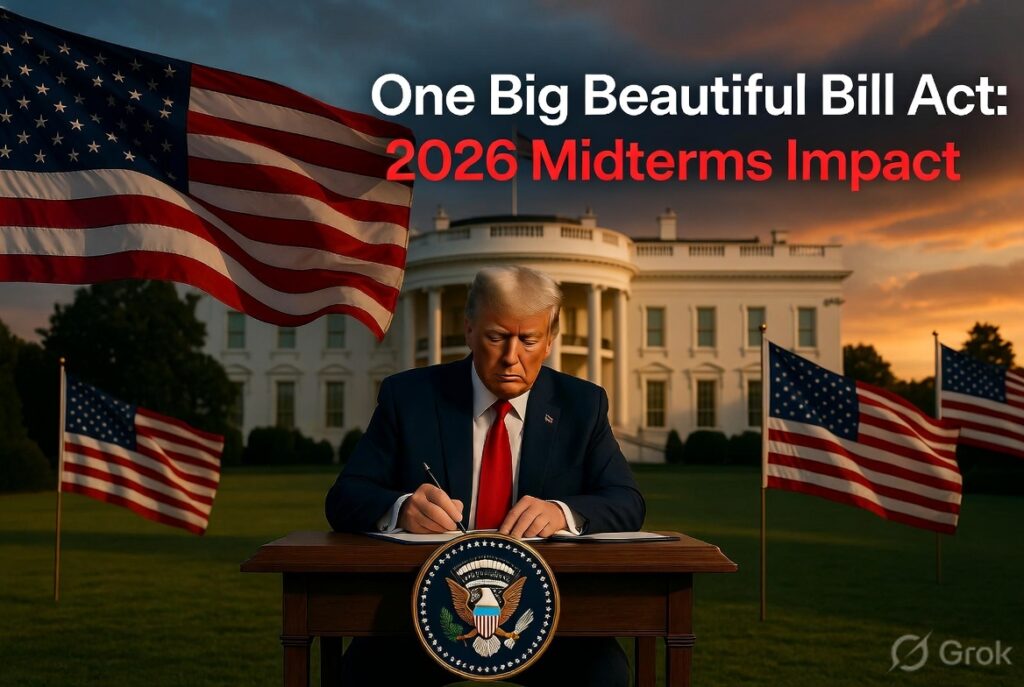

It’s been exactly one year since President Donald Trump stood on the White House lawn and proudly signed the One Big Beautiful Bill Act into law on July 4, 2025. At the time, it felt like a historic victory for Republicans — a massive package promising tax relief for working families, stronger borders, and a shake-up of the old system.
But fast forward to today, and the mood is quite different. What was supposed to be a major campaign boast is now turning into one of the hottest political battlegrounds ahead of the 2026 Midterms.
The Promise vs The Reality
When the One Big Beautiful Bill Act (OBBBA) was passed, Republicans celebrated the permanent extension of the 2017 tax cuts, no tax on tips, no tax on overtime, and new incentives for businesses. For many hourly workers and small business owners, these changes felt like real relief.
Yet, one year later, the conversation has shifted. The parts of the bill that cut deeply into Medicaid and food stamps (SNAP) are getting most of the attention — and not in a good way for the GOP.
Why Healthcare Cuts Are Hurting Republicans
The numbers are hard to ignore. The One Big Beautiful Bill Act is projected to slash around $1.2 trillion from Medicaid over the next decade. In several swing districts, especially in rural areas and places like California’s Central Valley, Democrats are hammering this issue hard.
I’ve seen voters and local clinics genuinely worried. Losing healthcare coverage isn’t just a political talking point — it’s personal for millions of families. Democrats are using stories of real people who could lose insurance to paint the bill as something that hurts everyday Americans.
Republicans, on the other hand, argue that the reforms are necessary. They say work requirements bring dignity and reduce fraud. They also point to the new $50 billion Rural Health Program as proof they’re trying to help smaller communities. Still, many health experts believe this isn’t enough to balance out the cuts.
The Tax Cuts That People Actually Feel
On the brighter side, many working people are seeing benefits. Construction workers getting extra overtime pay without heavy taxation, waitstaff keeping more of their tips — these things matter in daily life.
Republicans in tough races are going straight to job sites and small businesses to remind voters: “This is the money we let you keep.”
The challenge? Many of these popular worker benefits expire in 2028, while the bigger tax advantages for corporations and high earners are permanent. Democrats are quick to call this unfair.
So, Who’s Winning the Narrative?
Right now, it feels like a split decision. In manufacturing regions, the tax cuts are landing well. But in areas with high numbers of low-income families, the Medicaid and SNAP cuts are creating real anger.
Even Trump himself seemed to sense the messaging problem early on and tried to rebrand parts of it. That hasn’t gone unnoticed by Democrats, who love pointing out that Republicans barely call it the “One Big Beautiful Bill” anymore.
What This Means for 2026 Midterms
As campaigns heat up, the One Big Beautiful Bill Act is no longer just legislation — it’s become a character test in many races. Will voters reward the tax relief, or will they punish the cuts to healthcare and food assistance?
This much is clear: the Trump Big Beautiful Bill is going to play a very big role in deciding who controls the House after the 2026 elections. It’s personal, it’s emotional, and it’s far from settled.
What do you think? Has the One Big Beautiful Bill Act helped your family or made things harder? The coming months will show whether this bold law becomes a lasting Republican win or a gift to the Democrats.